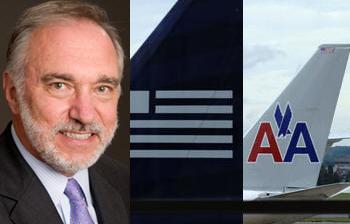
Scott Kirby, CEO of United Airlines, has launched a rare public broadside against American Airlines, accusing the Fort Worth-based carrier of derailing potential talks that could reshape the U.S. aviation landscape. In a pointed statement, Kirby expressed frustration over American’s refusal to even entertain discussions about a possible merger—a move he claims “defies logic” amid growing pressure for industry consolidation.
This isn’t just corporate posturing. It’s a strategic signal from United leadership that they’re willing to push boundaries to stay competitive in an era defined by shrinking margins, labor shortages, and intensifying international competition. Kirby’s comments come at a time when American Airlines is still recovering from a series of operational meltdowns and customer service failures, while United has invested heavily in long-haul international routes and fleet modernization.
The refusal from American to engage, Kirby argues, isn’t just a missed opportunity—it could endanger the long-term viability of both carriers in a global market dominated by alliances and mega-carriers.
Why a United-American Merger Makes Strategic Sense
On paper, the logic behind a United-American merger is compelling. Together, they would form the largest airline in the world by fleet size and domestic market share, surpassing even Delta in operational scale.
Consider the numbers:
- United operates over 870 mainline aircraft.
- American flies around 900.
- Combined, they’d control nearly 40% of U.S. domestic capacity.
But scale isn't the only driver. Synergies in route networks could eliminate redundancies and boost international competitiveness.
Network Overlap and Gaps
United’s strength lies in its international footprint—especially Asia and transatlantic routes from hubs like Newark, Chicago, and San Francisco. American, meanwhile, dominates Latin America and has a stronger presence in Dallas and Charlotte. A merger would allow seamless connectivity across all major U.S. gateways with minimal overlap.
For example: - American’s Latin American cargo and passenger volume from Miami could feed directly into United’s Pacific routes via Houston. - United’s premium transatlantic product from Newark could pair with American’s extensive European network from Philadelphia and Charlotte.
Instead of battling for the same corporate contracts or frequent flyers, they could offer a unified, coast-to-coast network.
American Airlines’ Resistance: Stubbornness or Strategy?
American Airlines CEO Robert Isom has remained publicly silent on the specifics, but sources close to the airline say the leadership team sees no value in merging under current conditions. Their stance rests on two pillars: independence and recovery.
American has spent the last two years rebuilding operational reliability after a 2022 holiday meltdown that stranded tens of thousands. Executives fear that merger talks—even exploratory ones—could distract from core recovery goals and spook investors.
Additionally, American has been investing heavily in its “New World,” a multi-billion-dollar initiative to upgrade cabins, lounges, and customer service. Merging with United could disrupt those plans or force costly harmonization with United’s Polaris business class and digital platforms.
But there’s another angle: ego.

Historically, American has seen itself as the industry leader. Being approached by United—a rival traditionally seen as a step behind in domestic dominance—may feel like a demotion, not an opportunity.
Kirby’s push may have backfired by making American defensive rather than reflective.
Regulatory Hurdles: Could a Merger Even Happen?
Even if both airlines agreed, the path to approval would be treacherous.
The Department of Justice (DOJ) has grown increasingly skeptical of mega-mergers, especially after blocking the proposed JetBlue-Spirit deal in 2023. The Biden administration has made airline consolidation a key antitrust focus, arguing that fewer competitors lead to higher prices and worse service.
A United-American merger would face immediate scrutiny:
| Factor | Regulatory Concern |
|---|---|
| Domestic Market Share | Combined control of ~40% raises red flags |
| Hub Dominance | United owns Houston; American owns Dallas—both could trigger local monopolies |
| Fare Impact | DOJ would demand proof of lower prices, not higher |
| Labor Integration | Merging two massive unions (APA and ALPA) could create instability |
Past mergers—like Delta-Northwest or American-US Airways—were approved during periods of leniency. Today’s climate is different. The DOJ isn’t just looking at balance sheets; it’s watching consumer outcomes.
Even a “friendly” merger would require massive divestitures—possibly spinning off entire hubs or regional operations—to gain approval.
What United Gains by Going Public
By publicly calling out American, Kirby isn’t just venting frustration. He’s playing a sophisticated game of perception.
First, he positions United as forward-thinking and bold—willing to make tough decisions for long-term strength. This plays well with investors and employees.
Second, he puts pressure on American’s leadership. If American continues to underperform operationally while rejecting “obvious” strategic moves, shareholders may start asking tough questions.
Third, Kirby is subtly appealing to regulators. By framing the refusal as anti-competitive behavior, he sets the stage for future arguments that American is prioritizing short-term control over consumer benefit.
This isn’t the first time Kirby has used public pressure as a tool. As former president of American Airlines, he helped steer the US Airways merger. He knows how boardroom dynamics work—and when to leak a message to the press.
Industry Reaction: Skepticism and Speculation Wall Street’s response has been mixed.
Some analysts see merit in the idea. “The global airline industry is consolidating,” said Laura Hildreth of AviaCap Partners. “Gulf carriers, European alliances, and Asian mega-joints are outspending and outmaneuvering U.S. airlines. If we don’t consolidate, we lose relevance.”
Others aren’t convinced. “This feels more like a negotiating tactic than a real proposal,” said Mark Schneier of FAA Analytics. “United wants American to improve its operations so it can be a more valuable acquisition target later.”
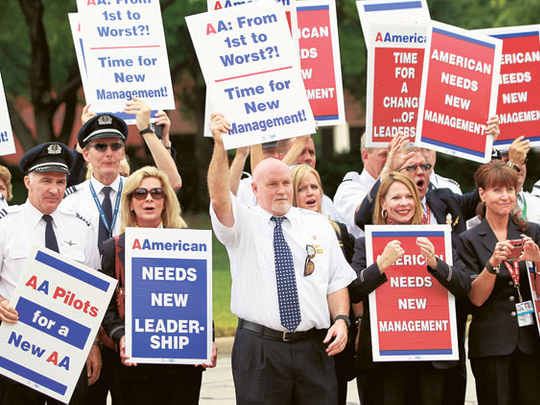
Pilots’ unions have also weighed in. The Allied Pilots Association (APA), which represents American’s pilots, issued a statement warning that “any forced integration would jeopardize jobs, seniority, and safety standards.”
Meanwhile, travelers remain largely indifferent. Many already view the “Big Three” (American, Delta, United) as interchangeable when it comes to fees, cancellations, and bag charges.
A Missed Opportunity—Or a Smart Avoidance?
Let’s be clear: mergers are risky. The airline industry is littered with failed integrations.
Remember US Airways? Its merger with America West took over a decade to fully harmonize. The American-US Airways merger faced years of IT glitches, brand confusion, and labor disputes.
United’s own merger with Continental was notoriously rocky—delays in system integration, customer service breakdowns, and a diluted brand identity plagued the company for years.
So American’s caution isn’t unfounded. Merging two airlines with 250,000+ employees, dozens of union contracts, and vastly different cultures is like performing open-heart surgery on a moving train.
But avoiding merger talks entirely? That’s a different issue.
The smart play wouldn’t be a full absorption—it would be a strategic alliance: shared lounges, coordinated schedules, joint international bidding, and common technology platforms.
Delta and Air France-KLM have shown how deep partnerships can mimic merger benefits without the regulatory headache.
United and American could do the same—yet neither has moved in that direction.
What’s Next for United and American?
United won’t abandon its push for scale. Expect more public statements, investor briefings, and perhaps even proxy fights if American’s board resists internal pressure.
American, meanwhile, must prove it can stand on its own. That means hitting operational targets, regaining customer trust, and showing sustained profitability.
But time is not on their side.
International competitors—like Emirates, Qatar Airways, and Air China—are expanding U.S. routes with newer fleets, better service, and aggressive pricing. Meanwhile, ultra-low-cost carriers (Frontier, Spirit, Breeze) are chipping away at short-haul profits.
If United and American can’t find a way to cooperate—whether through merger, alliance, or joint ventures—they risk becoming the Blockbuster and Hollywood Video of aviation: once-dominant brands slowly overtaken by smarter, leaner players.
A Clear Path Forward—Without a Merger
Merger or not, there are immediate steps both airlines could take to improve competitiveness:
- Launch a Joint Transatlantic Venture
- Combine marketing, scheduling, and codeshares on Europe routes to compete with SkyTeam and Star Alliance giants.
- Harmonize Basic Economy Rules
- Standardize baggage, seat selection, and change fees to reduce customer confusion and build trust.
- Share Airport Infrastructure
- Co-locate check-in counters, lounges, and gates at overlapping hubs like Chicago, Washington-Dulles, and Phoenix.
- Develop a Unified Loyalty Program (Pilot Program)
- Allow MileagePlus and AAdvantage members to earn and redeem across both airlines on select routes.
- Coordinate Labor Training and Safety Protocols
- Even without merging, shared training standards could improve cross-airline backup crew deployment.
These moves wouldn’t require DOJ approval and could deliver 70% of the benefits of a merger—with far less risk.
The Bottom Line
Scott Kirby’s public jab at American Airlines isn’t just drama—it’s strategy. He’s forcing a conversation the industry has been avoiding: can U.S. airlines compete globally without consolidating power?
American’s refusal to engage may protect short-term autonomy, but it could cost them long-term relevance.
The future of American and United doesn’t have to be either/or. But silence and rivalry won’t get them where they need to go.
It’s time for both airlines to stop posturing and start partnering—before the window for meaningful change closes for good.
FAQ
What should you look for in United Chief Slams American Airlines Over Merger Rejection? Focus on relevance, practical value, and how well the solution matches real user intent.
Is United Chief Slams American Airlines Over Merger Rejection suitable for beginners? That depends on the workflow, but a clear step-by-step approach usually makes it easier to start.
How do you compare options around United Chief Slams American Airlines Over Merger Rejection? Compare features, trust signals, limitations, pricing, and ease of implementation.
What mistakes should you avoid? Avoid generic choices, weak validation, and decisions based only on marketing claims.
What is the next best step? Shortlist the most relevant options, validate them quickly, and refine from real-world results.