Every week, thousands of supervisors print out a one-page safety talk, gather their crew for ten minutes, and call it compliance. Yet injuries still happen. Near-misses go unreported. Workers tune out. The problem isn’t the intention—it’s the execution.
Generic, outdated, or poorly structured toolbox talks create the illusion of safety training without delivering real behavioral change. But when done right—with focused content, clear visuals, and actionable takeaways—toolbox talks become powerful tools for preventing accidents.
The key? A well-designed, downloadable health and safety toolbox talks PDF that’s easy to use, consistently formatted, and relevant to real job-site risks.
This guide shows you how to leverage PDF-based toolbox talks effectively, where to find high-quality templates, and what to include to drive real engagement and retention on your site.
What Are Toolbox Talks and Why Use PDFs?
Toolbox talks are short, informal safety meetings (typically 5–15 minutes) held at the job site to address specific hazards, reinforce safe behaviors, or review procedures. They’re most effective when timely—delivered before a task begins or after a near-miss occurs.
Using PDFs for these talks offers major advantages:
- Consistency: Every team gets the same core message.
- Portability: Can be accessed on tablets, printed, or shared via email—even offline.
- Archival: Digital records support compliance audits.
- Branding & Compliance: Company logos, OSHA references, and sign-off sections can be embedded.
Unlike slideshow decks or verbal-only briefings, a well-structured PDF serves as both a presentation aid and a training record.
Reality check: A 2023 NIOSH study found that sites using standardized safety talk formats saw a 34% drop in repeat hazards within three months.
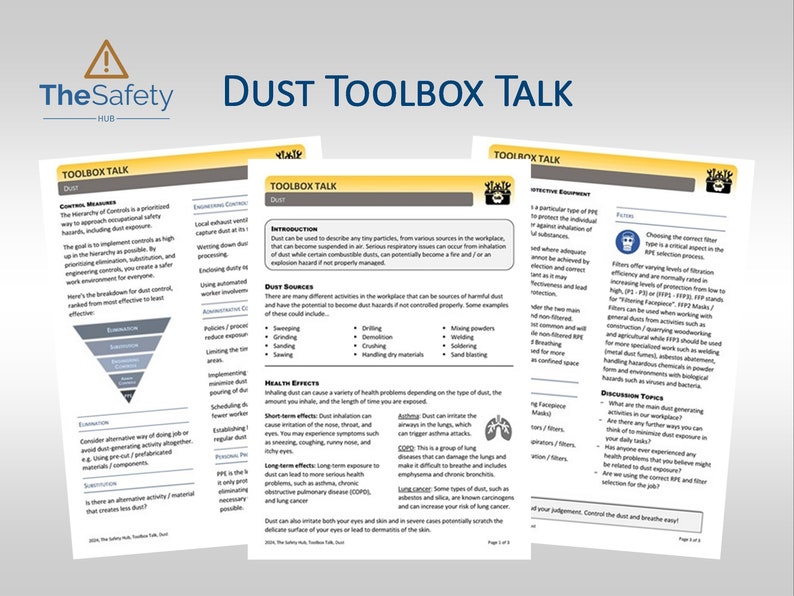
Critical Elements of an Effective Safety Toolbox Talk PDF
Not all PDFs are created equal. A high-impact toolbox talk document must go beyond bullet points. Include these components:
1. Clear Topic & Objective
Not: “Work Zone Safety”
Below it, state the objective: “Today’s talk will help crew members identify blind spots around heavy equipment and use proper spotters.”
2. Real-World Scenario Open with a brief story or scenario: “Last week at a site in Ohio, a worker ducked under a raised dump truck bed to retrieve a tool. The bed dropped unexpectedly—he survived, but with two broken vertebrae.”
This grabs attention and makes the risk tangible.
3. Visuals and Diagrams Include simple illustrations:
- Proper PPE layout
- Safe distancing from machinery
- Hand signal charts
Visuals increase retention by up to 65% (brain science backs this).
4. Discussion Prompts Add 3–5 questions for engagement:
- “Where have you seen blind spots on our site?”
- “What’s one time you felt unsafe near moving equipment?”
Forced reflection builds ownership.
5. Action Items & Sign-Off End
with a checklist:
- [ ] Review hand signals with backhoe operator
- [ ] Inspect high-vis vest condition
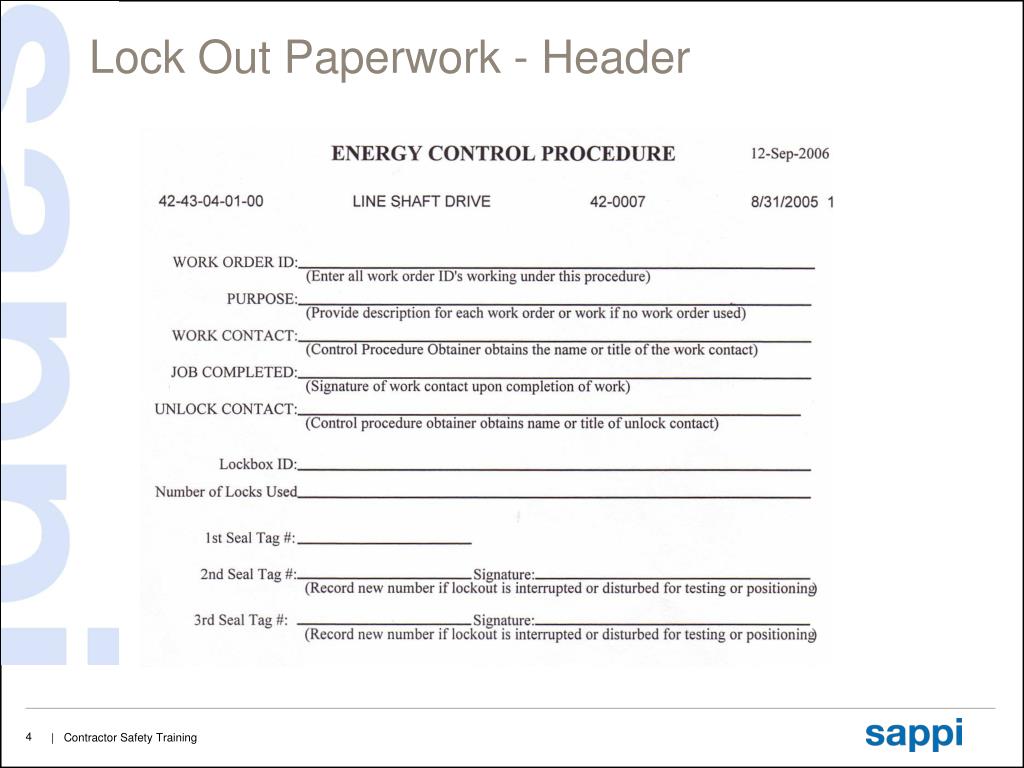
Then, include lines for: - Supervisor name - Date - Crew signatures
This turns talk into traceable action.
Top 5 Sources for Downloadable Health and Safety Toolbox Talks PDFs
Finding quality, customizable PDFs matters. Here are five trusted sources:
| Source | Key Features | Best For | Cost |
|---|---|---|---|
| OSHA.gov | Free, OSHA-compliant, 100+ topics | Regulatory alignment | Free |
| SafetyInfo.com | Editable PDFs, PowerPoint versions, sign-off sheets | Fast deployment | Free with registration |
| Creative Safety Supply | Color-coded, visual-heavy, 5S & lean safety focus | Manufacturing teams | Free PDFs, paid bundles |
| SafetyCulture (iAuditor) | Customizable templates, mobile app integration | Digital workflows | Free templates, subscription for full access |
| EHS Daily Advisor | Industry-specific (construction, oil/gas), archived library | Niche hazard topics | Free with email signup |
Pro Tip: Always add your company name, site-specific hazards, and emergency contacts to any downloaded template before use.
Avoid sites that offer “1000+ safety talks” in one zip file—these are often outdated, poorly written, or duplicated content.
How to Customize a Generic PDF for Maximum Impact
A downloaded PDF is just a starting point. To make it stick, you must customize.
Step 1: Localize the Hazard Change: “Falls from ladders are common” To: “We’ve had two ladder incidents this year—one on the south tower stairwell.”
Site-specific data makes the talk urgent.
2. Add Your Photos Insert real images from your job site:
- A poorly stacked material pile
- A blocked fire exit
- A worker wearing incorrect gloves
Nothing beats seeing your own environment.
3. Integrate Procedures Link to your internal documents:
- “Refer to Site SOP-204 for confined space entry”
- “Permit must be signed by Safety Officer Lopez”
This ties the talk to real workflows.
4. Translate When Needed If your crew speaks Spanish, Tagalog, or Navajo—print bilingual versions. A PDF can include side-by-side text or separate pages.
Common Mistake: Using English-only PDFs with non-native speakers. Misunderstanding = risk.
Common Mistakes When Using Safety Talk PDFs
Even with good content, execution fails. Avoid these pitfalls:
- Reading verbatim: Turn the PDF into a discussion guide, not a script.
- One-size-fits-all: Don’t use a warehouse forklift talk on a roofing crew.
- No follow-up: If you identify a hazard (e.g., frayed extension cords), fix it—and tell the team you did.
- Poor timing: Never hold a talk during meal prep, shift turnover, or rain delays.
- Faking attendance: Forged sign-offs erode culture and violate OSHA.
Field Insight: A foreman in Alberta reduced hand injuries by 70%—not because he had better PDFs, but because he brought in gloves from past incidents and said, “This is what happened when we cut corners.”
Integrating PDF Talks Into Your Safety Workflow
A PDF shouldn’t be a one-off. Build it into your rhythm:
- Monday AM: Download or create the week’s 3 talks (e.g., Fall Protection, Electrical Safety, Equipment Check).
- Daily, 7:10 AM: Crew huddle. Supervisor projects or prints the PDF.
- During talk: Use the discussion prompts. Encourage stories.
- After talk: Scan signed PDF, upload to shared drive or EHS software.
- Friday PM: Review topics covered, note recurring issues.
Use a simple tracker:
| Date | Topic | Supervisor | Signatures Attached | Follow-Up Actions |
|---|---|---|---|---|
| Apr 1 | Excavation Safety | J. Rivera | Yes | Inspect trench shoring by 4/3 |
This creates a living safety record.
What to Do When Crews Tune Out
Even the best PDF won’t help if attention fades.
Try these engagement strategies:
- Flip the script: Have a crew member lead the talk using the PDF.
- Gamify: Offer a $10 gift card for best safety suggestion each week.
- Use props: Bring in a damaged hard hat or expired fire extinguisher.
- Shorten it: 7-minute talk > 15-minute lecture.
“We started letting apprentices run the toolbox talk. First time, it was awkward. By week three, they were spotting hazards I’d missed.” — Denise M., Project Manager, Texas
The goal isn’t perfection. It’s participation.
Build a Library That Grows With Your Site
The best safety programs don’t rely on downloaded templates forever. They create their own library.
Start by: - Keeping every signed PDF in a labeled folder (digital or physical). - Tagging by topic: Fall Hazards, PPE, Lockout/Tagout. - Reviewing monthly: What topics keep coming up? That’s where training gaps live.
Over time, replace generic content with your own PDFs—based on incidents, audits, and near-misses from your team.
This turns safety from compliance into culture.
Final Thought: A PDF Is Only as Strong as the Conversation It Starts
A health and safety toolbox talks PDF isn’t magic. But in the right hands, it’s a catalyst. It standardizes communication, documents accountability, and—most importantly—opens the door to real dialogue.
Don’t just download and distribute. Customize. Discuss. Follow up. Let the PDF be the starting point, not the endpoint.
Your next toolbox talk could prevent a life-altering injury. Make sure it’s worth listening to.
Frequently Asked Questions
Where can I get free toolbox talks in PDF format? OSHA.gov, SafetyInfo.com, and EHS Daily Advisor offer free, downloadable PDFs covering common workplace hazards.
How long should a toolbox talk be? Ideally 5–15 minutes. The PDF should support a concise, focused discussion—not a lecture.
Do toolbox talks need to be signed? Yes. Signatures confirm attendance and understanding. Include name, date, and signature lines in your PDF.
Can I edit a downloaded safety talk PDF? Most free PDFs are editable or come with Word versions. Always customize to reflect your site’s risks and procedures.
How often should toolbox talks be held? At minimum, weekly. High-risk tasks or new crews may require daily talks.
Are toolbox talks required by OSHA? Not explicitly, but OSHA requires employers to train workers on hazards—which toolbox talks help fulfill.
What topics should I cover? Start with top site risks: falls, electrical safety, PPE, equipment operation, and emergency response. Rotate based on season, task, and incident history.
FAQ
What should you look for in Health and Safety Toolbox Talks PDF Guide for Worksites? Focus on relevance, practical value, and how well the solution matches real user intent.
Is Health and Safety Toolbox Talks PDF Guide for Worksites suitable for beginners? That depends on the workflow, but a clear step-by-step approach usually makes it easier to start.
How do you compare options around Health and Safety Toolbox Talks PDF Guide for Worksites? Compare features, trust signals, limitations, pricing, and ease of implementation.
What mistakes should you avoid? Avoid generic choices, weak validation, and decisions based only on marketing claims.
What is the next best step? Shortlist the most relevant options, validate them quickly, and refine from real-world results.